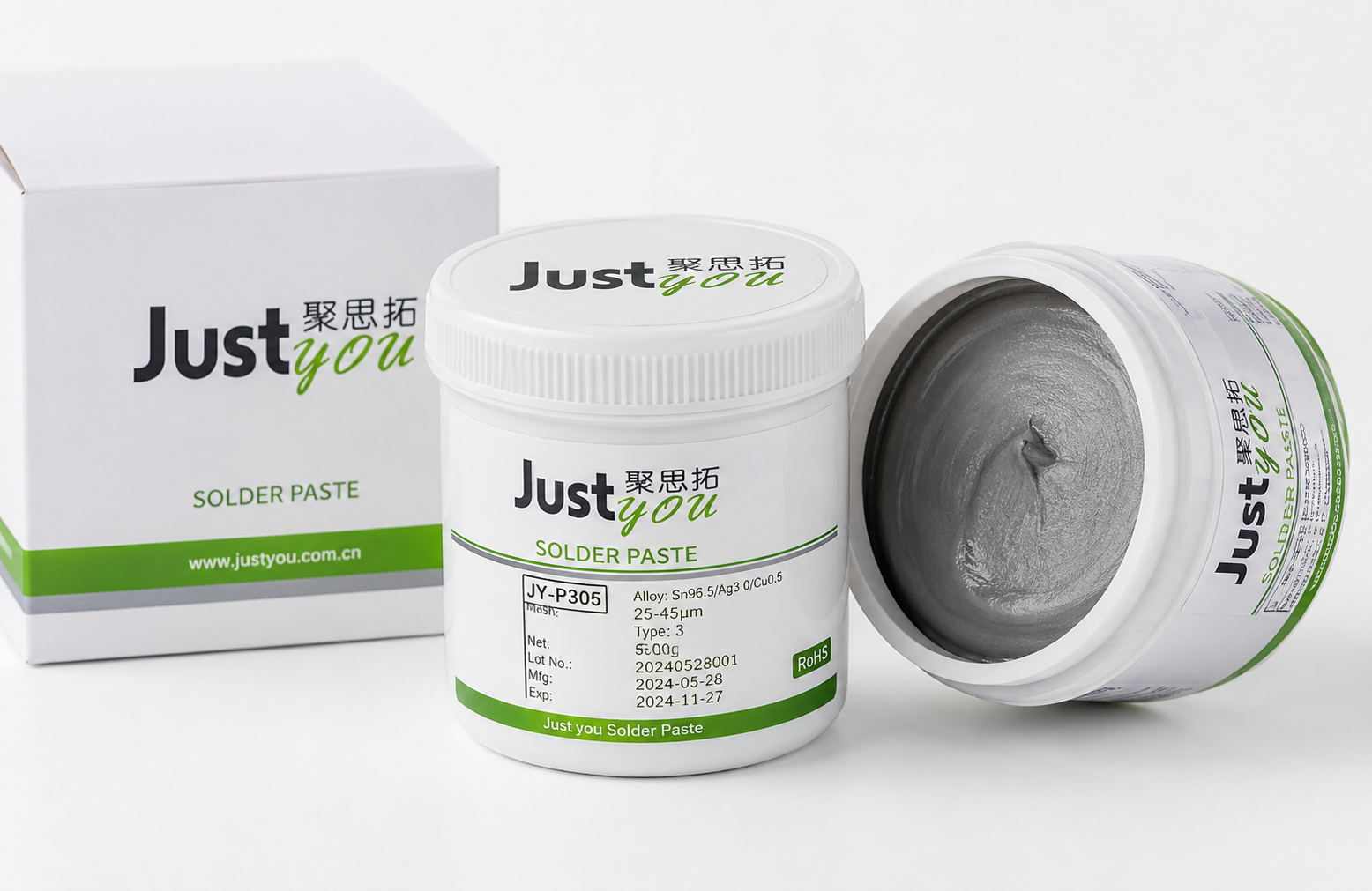

Introduction
The global electronics manufacturing industry is entering a new stage of transformation driven by artificial intelligence, advanced semiconductor packaging, electric vehicles, and next-generation communication technologies.
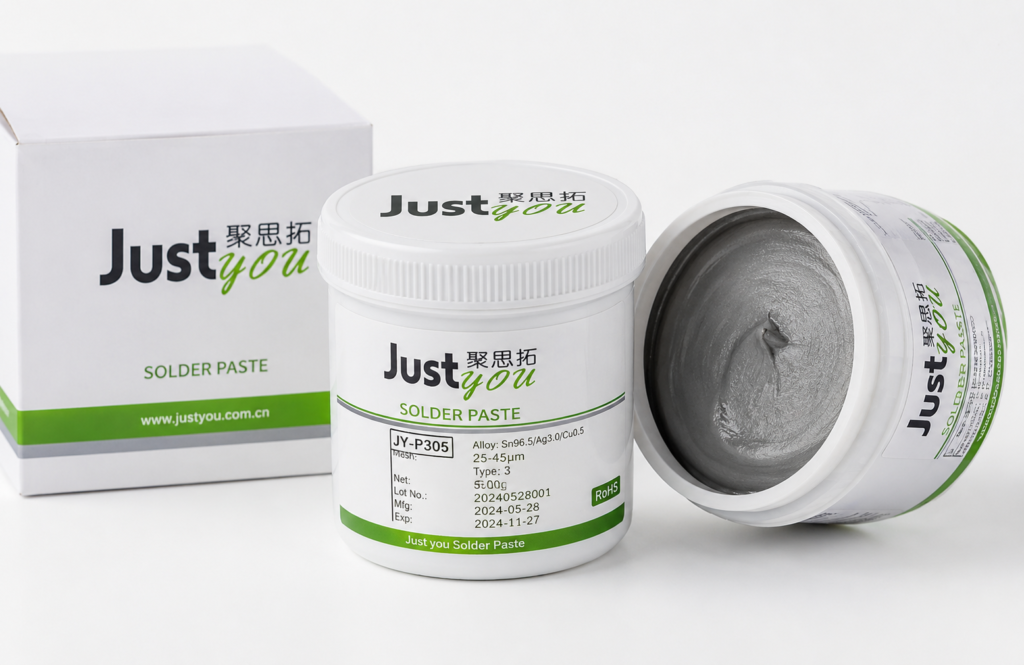
As PCB designs become more compact and electronic assemblies become increasingly complex, solder paste is no longer considered a simple consumable material. Instead, it has become a critical process material directly affecting manufacturing yield, product reliability, and production efficiency.
In 2026, several major trends are reshaping the solder paste industry and influencing how electronics manufacturers select assembly materials.
Learn more about our solder paste solutions:
https://ejustyou.com/products/
Trend 1: Growing Demand for Low Temperature Solder Paste
One of the fastest-growing segments in the soldering materials industry is low temperature solder paste.
Modern electronic devices increasingly use:
- Flexible substrates
- Wearable electronics
- Miniaturized sensors
- AI modules
- Automotive electronics
These products often contain heat-sensitive components that cannot tolerate traditional high-temperature reflow processes.
Industry reports indicate that the low temperature solder paste market is experiencing strong global growth as manufacturers seek lower thermal stress and improved process reliability.
Benefits driving adoption include:
- Reduced component warpage
- Lower energy consumption
- Improved assembly yield
- Better reliability for advanced packaging
Trend 2: Advanced Semiconductor Packaging Is Driving Material Innovation
The rise of AI servers, high-performance computing, and chiplet architectures is accelerating demand for advanced semiconductor packaging technologies.
Technologies such as:
- System-in-Package (SiP)
- CoWoS Packaging
- 3D IC Integration
- High-Density Interconnects
require increasingly sophisticated solder materials. Advanced packaging is becoming a strategic focus throughout the semiconductor industry.
As package pitches continue shrinking, manufacturers need:
- Fine-pitch solder paste
- Ultra-fine solder powder
- Low-voiding formulations
- Improved thermal management
These requirements are driving continuous innovation in solder paste chemistry and alloy design.
Trend 3: AI Is Entering Electronics Manufacturing
Artificial intelligence is rapidly being integrated into electronics production environments.
Recent research highlights growing adoption of AI-assisted reliability analysis and manufacturing optimization within electronics packaging and assembly processes.
Applications include:
- Solder joint inspection
- Process optimization
- Defect prediction
- Yield improvement
- Reflow profile optimization
Future SMT production lines will increasingly combine advanced solder materials with AI-driven manufacturing systems.
Trend 4: Fine-Pitch Assembly Continues to Expand
Electronic products continue becoming smaller while requiring greater functionality.
As a result, fine-pitch SMT assembly is becoming the industry standard.
Manufacturers increasingly require:
- Type 4 solder powder
- Type 5 solder powder
- Type 6 solder powder
for applications involving:
- BGA
- CSP
- QFN
- Micro-BGA
Research shows that solder paste performance plays a major role in component alignment and assembly accuracy as package density increases.
Trend 5: Sustainability and Environmental Compliance
Environmental regulations continue driving the transition toward lead-free and eco-friendly soldering materials.
Manufacturers are focusing on:
- RoHS compliance
- REACH compliance
- Halogen-free formulations
- Reduced VOC emissions
The lead-free solder paste market continues expanding globally as regulations become stricter and sustainability requirements increase.
Trend 6: Rising Material Costs Increase Focus on Process Efficiency
Electronics manufacturers are facing ongoing volatility in raw material pricing.
Key metals affecting solder paste costs include:
- Tin
- Silver
- Copper
Material cost pressures are pushing manufacturers to prioritize:
- Higher first-pass yield
- Reduced rework
- Lower defect rates
- Better process control
Industry analysts note that solder materials remain one of the key cost drivers in SMT manufacturing operations.
Conclusion
The solder paste industry is evolving rapidly alongside AI computing, semiconductor packaging, electric vehicles, and advanced electronics manufacturing.
Future growth will be driven by:
- Low temperature solder paste
- Fine-pitch assembly materials
- AI-assisted manufacturing
- Advanced packaging technologies
- Sustainable lead-free solutions
Manufacturers that adopt advanced soldering materials and process innovations will be better positioned to improve reliability, reduce defects, and remain competitive in global electronics production.
Explore our solder paste products:
https://ejustyou.com/products/
Industry applications:
https://ejustyou.com/industry-applications/
Contact us:
https://ejustyou.com/contact-us/