Complete Analysis and Solutions by JustYou
In modern electronic manufacturing, solder paste cleaning quality directly affects product reliability and long-term performance. One common issue faced by PCB assembly manufacturers is solder paste residue remaining inside heat sink holes after the cleaning process.
Incomplete cleaning of solder paste inside heat dissipation holes can lead to:
- Reduced thermal conductivity
- Electrical reliability problems
- Corrosion risks
- Poor solder joint performance
- Product failure during long-term operation
At JustYou, we specialize in advanced SMT materials and electronic manufacturing solutions. In this article, we will analyze the major causes of solder paste residue inside heat sink holes and provide professional solutions for improving cleaning efficiency and product quality.
Why Is Solder Paste Difficult to Remove from Heat Sink Holes?
Heat sink holes and thermal vias are often extremely small and deep, making them difficult to clean thoroughly. Residue may remain because of multiple factors involving:
- Cleaning processes
- Solder paste properties
- PCB structure design
- Equipment limitations
- Environmental conditions
Understanding these factors is essential for improving manufacturing reliability.
I. Cleaning Process Factors
1. Incorrect Cleaning Agent Selection
Choosing the wrong cleaning solution is one of the most common causes of solder paste residue.
Incompatible Solvent Types
Different solder pastes require different cleaning chemistries.
For example:
- Water-based cleaning agents may not effectively dissolve rosin-based flux residues
- Oil-based residues may resist water-soluble cleaners
If the cleaning agent does not match the solder paste chemistry, residues will remain inside the heat sink holes.
Insufficient Cleaning Agent Concentration
Over-diluted cleaning solutions reduce active ingredient concentration, lowering dissolving performance and cleaning efficiency.
Chemical Compatibility Issues
Some cleaning agents may react with:
- PCB substrates
- Metal heat spreaders
- Surface coatings
This reaction can form stubborn layers that are difficult to remove.
At JustYou, we recommend selecting cleaning agents specifically compatible with your solder paste formulation and PCB materials.
2. Improper Cleaning Parameters
Temperature Too Low
Low cleaning temperatures increase the viscosity of the cleaning solution, reducing penetration into deep thermal vias and micro holes.
As a result:
- Flowability decreases
- Dissolving speed slows
- Residue removal becomes incomplete
Insufficient Cleaning Time
If cleaning duration is too short, the solvent cannot fully dissolve hardened solder paste residues.
Insufficient Cleaning Pressure
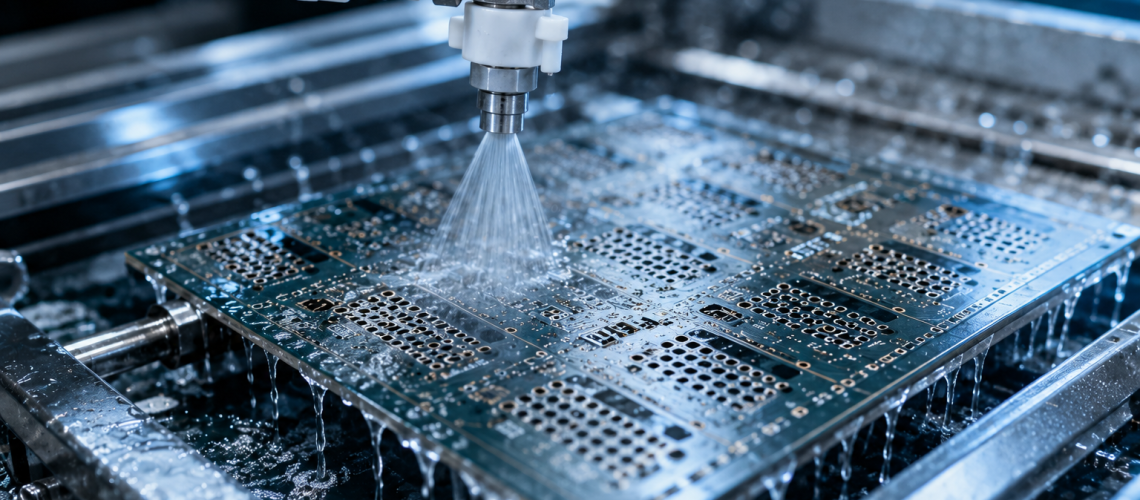
Low spray pressure or weak ultrasonic power cannot generate enough force to remove contaminants trapped inside narrow holes.
3. Limitations of Cleaning Methods
Single Cleaning Method
Using only one cleaning process, such as immersion or spray cleaning, often fails to clean complex PCB structures effectively.
For high-density electronic assemblies, JustYou recommends combining:
- Spray cleaning
- Ultrasonic cleaning
- Brushing
- Air blowing
to improve overall cleaning performance.
Cleaning Blind Spots
Vertical or angled thermal vias may prevent cleaning solutions from fully reaching internal surfaces.
This creates dead zones where solder paste residues accumulate.
II. Solder Paste and PCB Design Factors
1. Solder Paste Characteristics
High-Viscosity Solder Paste
Some no-clean solder pastes contain special flux systems designed for minimal residue visibility, but these residues may become difficult to remove from microvias.
Partially Cured Solder Paste
If solder paste is exposed to:
- Excessive heat
- Long storage periods
- Improper handling
the residue may partially cure and harden before cleaning.
This dramatically increases cleaning difficulty.
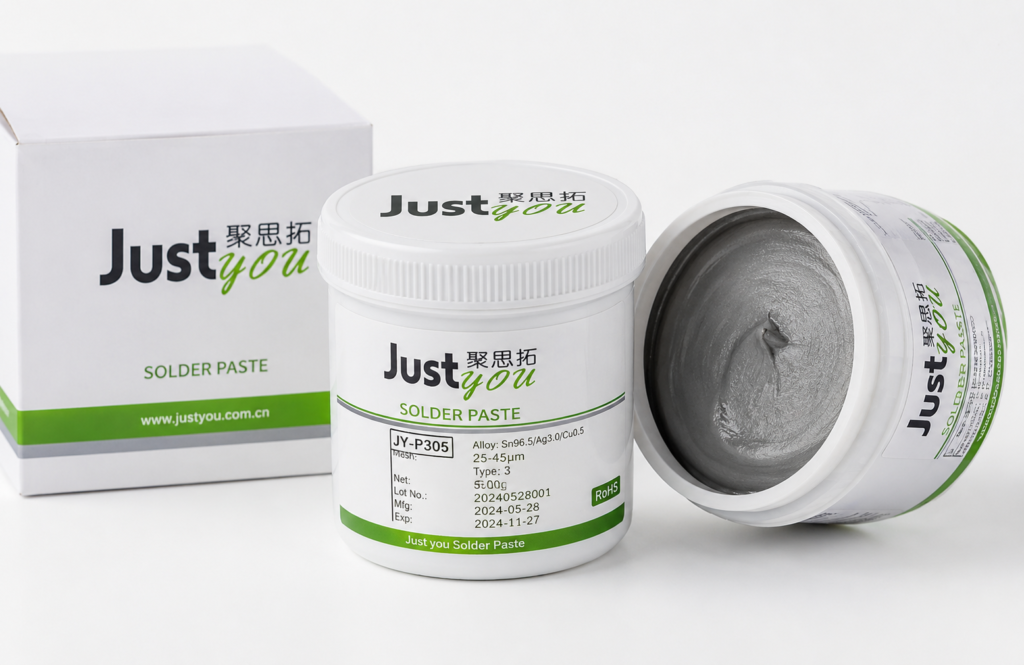
JustYou low-residue solder paste solutions are engineered to improve cleanability while maintaining excellent soldering reliability.
2. Heat Sink Hole Design Issues
Extremely Small Hole Diameter
Thermal vias smaller than 0.5 mm restrict cleaning solution flow.
As hole diameter decreases:
- Penetration becomes harder
- Residues accumulate more easily
- Rinsing efficiency drops
Excessive Hole Depth
Deep vias increase flow resistance and reduce cleaning effectiveness.
Rough Hole Walls
Rough internal surfaces increase residue adhesion area, making cleaning more difficult.
3. PCB Surface Treatment Effects
PCB surface finishes can influence cleaning performance.
Examples include:
- ENIG (Electroless Nickel Immersion Gold)
- OSP coating
- HASL processing
These treatments may alter surface wettability and affect cleaning solution penetration.
In addition, contamination such as:
- Fingerprints
- Oil
- Dust
- Transportation residues
can combine with solder paste and form stubborn deposits.
III. Equipment and Operational Problems
1. Cleaning Equipment Limitations
Nozzle Blockage
Clogged spray nozzles reduce cleaning solution distribution consistency.
This leads to insufficient cleaning flow inside heat sink holes.
Improper Ultrasonic Frequency
Different ultrasonic frequencies suit different contamination sizes.
- High frequencies clean fine particles
- Low frequencies remove heavier residues
Incorrect frequency selection reduces cleaning efficiency.
Incomplete Drying
Residual moisture after cleaning may carry microscopic solder paste particles and redeposit contaminants during drying.
2. Operational Process Errors
Lack of Pre-Cleaning
Large particles should be removed before the main cleaning stage using:
- Air blowing
- Brushing
- Pre-rinsing
Skipping this step reduces cleaning efficiency.
Poor Post-Cleaning Handling
Improper drying or lack of anti-static protection may cause secondary contamination.
Operator Negligence
Common issues include:
- Failure to replace cleaning solutions
- Incorrect machine parameter settings
- Lack of regular equipment calibration
At JustYou, we recommend standardized operating procedures and automated cleaning systems to improve process consistency.
IV. Environmental and Storage Factors
1. Temperature and Humidity Effects
Low Temperatures
Cold environments increase cleaning solution viscosity and reduce flowability.
High Humidity
High humidity may:
- Alter cleaning solution concentration
- Accelerate oxidation
- Increase residue formation
Stable workshop conditions are essential for consistent cleaning results.
2. Material Storage Problems
Expired Cleaning Agents
Old cleaning chemicals lose dissolving power and cleaning performance.
Long PCB Storage Time
Over time, solder paste residues may react with airborne contaminants and become harder to clean.
JustYou recommends strict inventory management for both solder paste and cleaning materials.
Recommended Solutions from JustYou
1. Optimize the Cleaning Process
To improve heat sink hole cleaning quality:
- Select cleaning agents compatible with your solder paste
- Adjust cleaning temperature and concentration
- Extend cleaning duration for complex PCB assemblies
- Use multi-stage cleaning methods
- Install filtration systems to prevent secondary contamination
2. Improve PCB Design
Design optimization can significantly reduce cleaning problems.
Recommended improvements include:
- Increasing hole diameter where possible
- Reducing hole depth ratios
- Improving hole wall smoothness
- Adding cleaning test holes during PCB development
3. Upgrade Cleaning Equipment
Regular maintenance of:
- Spray nozzles
- Ultrasonic transducers
- Filtration systems
- Drying systems
helps maintain stable cleaning performance.
Automated cleaning equipment can also reduce human operational errors.
4. Control Environmental Conditions
Maintain stable workshop conditions:
- Controlled temperature
- Controlled humidity
- Clean storage environments
This helps prevent oxidation and contamination buildup.
Why Choose JustYou SMT Solutions?
JustYou provides professional electronic manufacturing materials and SMT process support for global electronics industries.
Our Advantages
- High-performance solder paste
- Low-residue formulations
- Excellent cleanability
- Advanced SMT material technology
- Professional technical support
- OEM & ODM capabilities
- Global export experience
Our products are widely used in:
- PCB assembly
- Automotive electronics
- Semiconductor packaging
- Mini LED manufacturing
- Industrial automation
- Consumer electronics
Conclusion
Solder paste residue inside heat sink holes is a complex issue involving materials, cleaning processes, equipment, PCB design, and environmental factors.
By optimizing cleaning chemistry, improving process control, and selecting high-quality SMT materials, manufacturers can significantly improve product reliability and production yield.
JustYou remains committed to providing advanced solder paste solutions and professional technical support for modern electronic manufacturing industries worldwide.