
Introduction
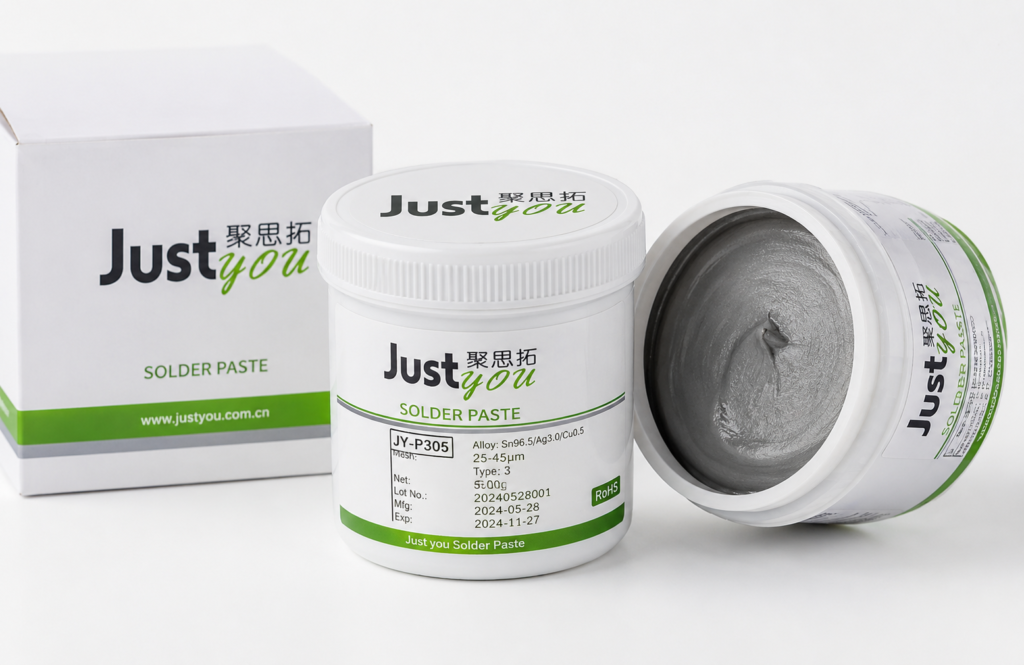
As electronic devices become smaller, more powerful, and more complex, solder paste technology is evolving rapidly to meet new manufacturing challenges.
From AI hardware and semiconductor packaging to electric vehicles and wearable devices, modern electronics require higher precision, improved reliability, and more efficient assembly processes.
In 2026, several breakthrough technologies are transforming the solder paste industry and creating new opportunities for electronics manufacturers worldwide.
Ultra-Low Temperature Solder Paste Technology
One of the most significant innovations is the development of ultra-low temperature solder paste.
Traditional lead-free solder paste often requires peak reflow temperatures above 240°C. New low-temperature formulations can operate below 150°C in some applications.
Advantages include:
- Lower thermal stress
- Reduced energy consumption
- Improved compatibility with flexible materials
- Enhanced assembly reliability
These technologies are particularly important for:
- Wearable devices
- Flexible electronics
- Medical devices
- Advanced sensor systems
Advanced Flux Chemistry
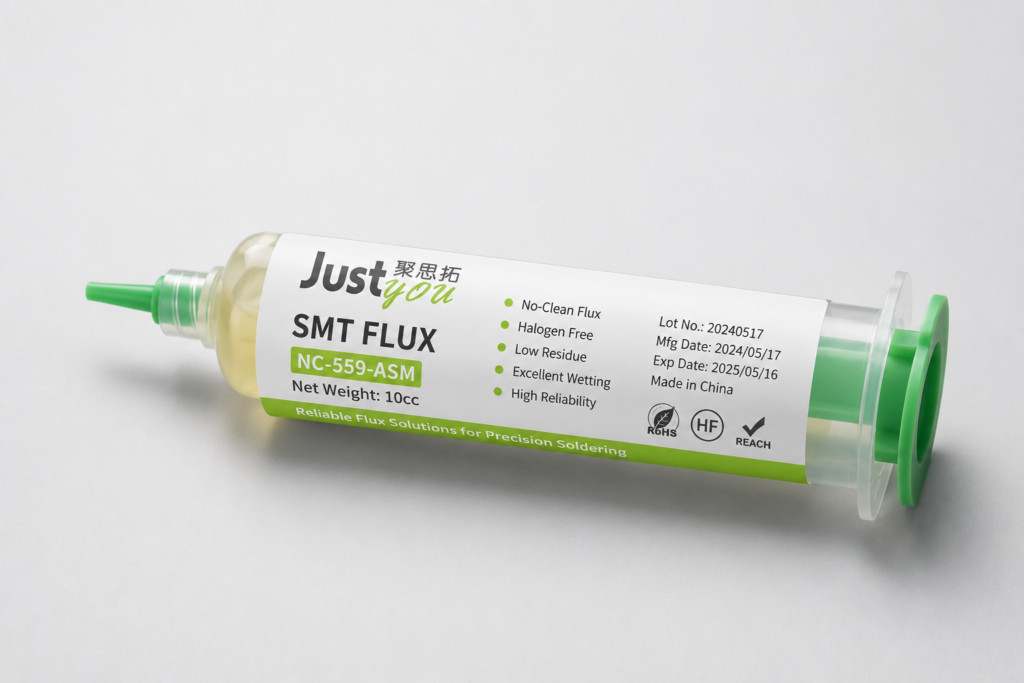
Modern flux systems are becoming increasingly sophisticated.
Recent developments focus on:
- Lower residue levels
- Improved wetting performance
- Enhanced oxidation control
- Better compatibility with advanced surface finishes
Industry research highlights the growing importance of advanced flux formulations for high-reliability electronics manufacturing.
Ultra-Fine Solder Powder Technology
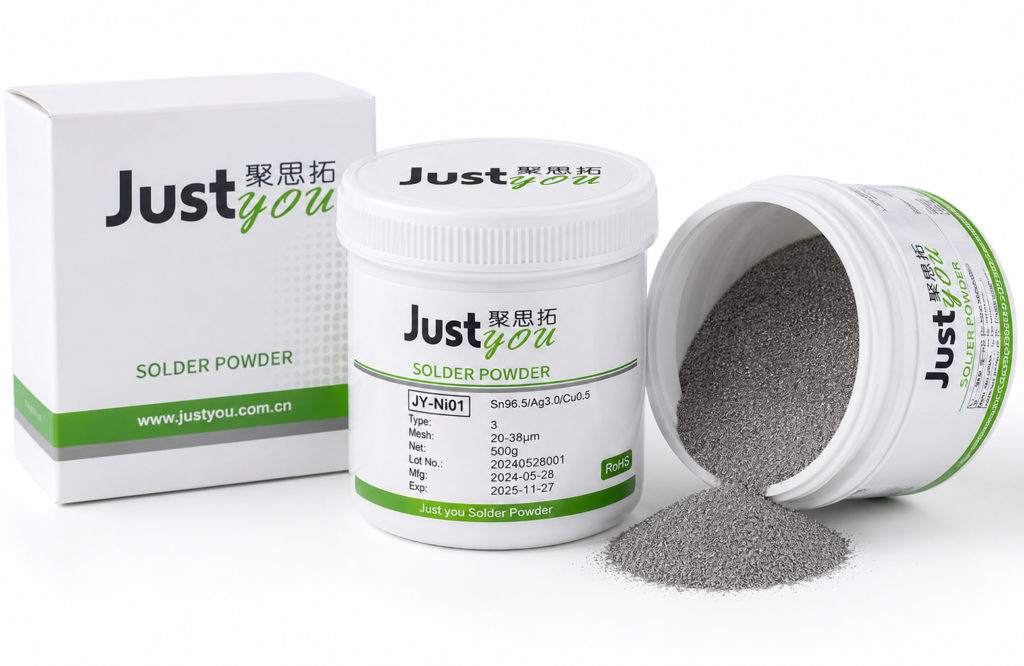
As component spacing continues shrinking, solder powder technology has become a major innovation area.
Manufacturers increasingly require:
- Type 5 solder powder
- Type 6 solder powder
- Narrow particle distribution
- High sphericity
Benefits include:
- Better stencil printing
- Reduced bridging
- Improved deposition accuracy
- Enhanced fine-pitch assembly capability
These technologies are essential for advanced semiconductor packaging and AI hardware manufacturing.
Low-Voiding Solder Paste Formulations
Void reduction has become a major focus in power electronics and automotive applications.
Low-voiding technologies help improve:
- Thermal conductivity
- Mechanical strength
- Power module reliability
- Heat dissipation performance
As EV production and AI computing infrastructure expand, demand for low-voiding solder paste continues increasing.
AI-Assisted Solder Process Optimization
Artificial intelligence is beginning to transform soldering process control.
Emerging AI systems can analyze:
- Printing performance
- Reflow profiles
- Solder joint quality
- Defect patterns
Researchers are actively exploring AI-assisted reliability prediction and inspection systems for electronics packaging.
Future SMT factories will increasingly combine intelligent software with advanced solder materials.
Specialized Solder Paste for Advanced Packaging
The rapid growth of advanced semiconductor packaging is creating demand for specialized solder paste solutions.
Key packaging technologies include:
- System-in-Package (SiP)
- 3D IC Packaging
- Co-Packaged Optics
- Chiplet Architectures
Industry analysts identify advanced packaging as one of the most important growth areas in semiconductor manufacturing.
These applications require:
- Fine-pitch solder paste
- Precise volume control
- High reliability
- Exceptional process consistency
Silver-Free Lead-Free Solder Technologies
With silver prices remaining volatile, manufacturers are exploring silver-free lead-free solder formulations.
Advantages include:
- Lower material cost
- Reduced supply chain risk
- Improved cost competitiveness
Research and market analysis indicate growing interest in alternative alloy systems that balance performance and affordability.
Future Outlook
The future of solder paste technology will be shaped by several key drivers:
- AI computing growth
- Semiconductor packaging innovation
- Electric vehicles
- Flexible electronics
- Sustainability requirements
- Smart manufacturing systems
Manufacturers that adopt advanced solder paste technologies will be better positioned to improve product quality, increase manufacturing efficiency, and meet the demands of next-generation electronic products.
Conclusion
Solder paste technology is no longer simply about joining components to PCBs.
It has become a critical enabler of:
- Advanced semiconductor packaging
- AI infrastructure
- Automotive electronics
- Medical devices
- Precision SMT manufacturing
As the electronics industry evolves, innovations in alloy systems, flux chemistry, solder powder technology, and AI-assisted process control will continue driving the future of electronic assembly.
Learn more about our advanced soldering materials:
Products:
https://ejustyou.com/products/
Industry Applications:
https://ejustyou.com/industry-applications/
Contact Us:
https://ejustyou.com/contact-us/